Common situations we solve

Real Flooring Cases in Burgos

Instead of inventing reviews, names or exact addresses, we explain real, common situations we regularly solve installing, sanding and repairing floating floors and parquet in Burgos and its province.

Realistic cases without invented names or addresses

This page shows how we really work. Each case summarises a frequent type of job in Burgos: floating floor installation in older blocks, sanding and varnishing of original parquet in historic flats, vinyl flooring in hospitality premises, repairs after water damage, solid wood in newer homes and flooring compatible with underfloor heating.

We do not publish private customer data. We prefer to explain the problem with the subfloor, the logic behind the chosen system, the usual materials and the result we aim for on site.

Examples of real situations we solve

Each block summarises a frequent type of job, with real photos of our work in Burgos and its province.

Case 1Flat in a residential block

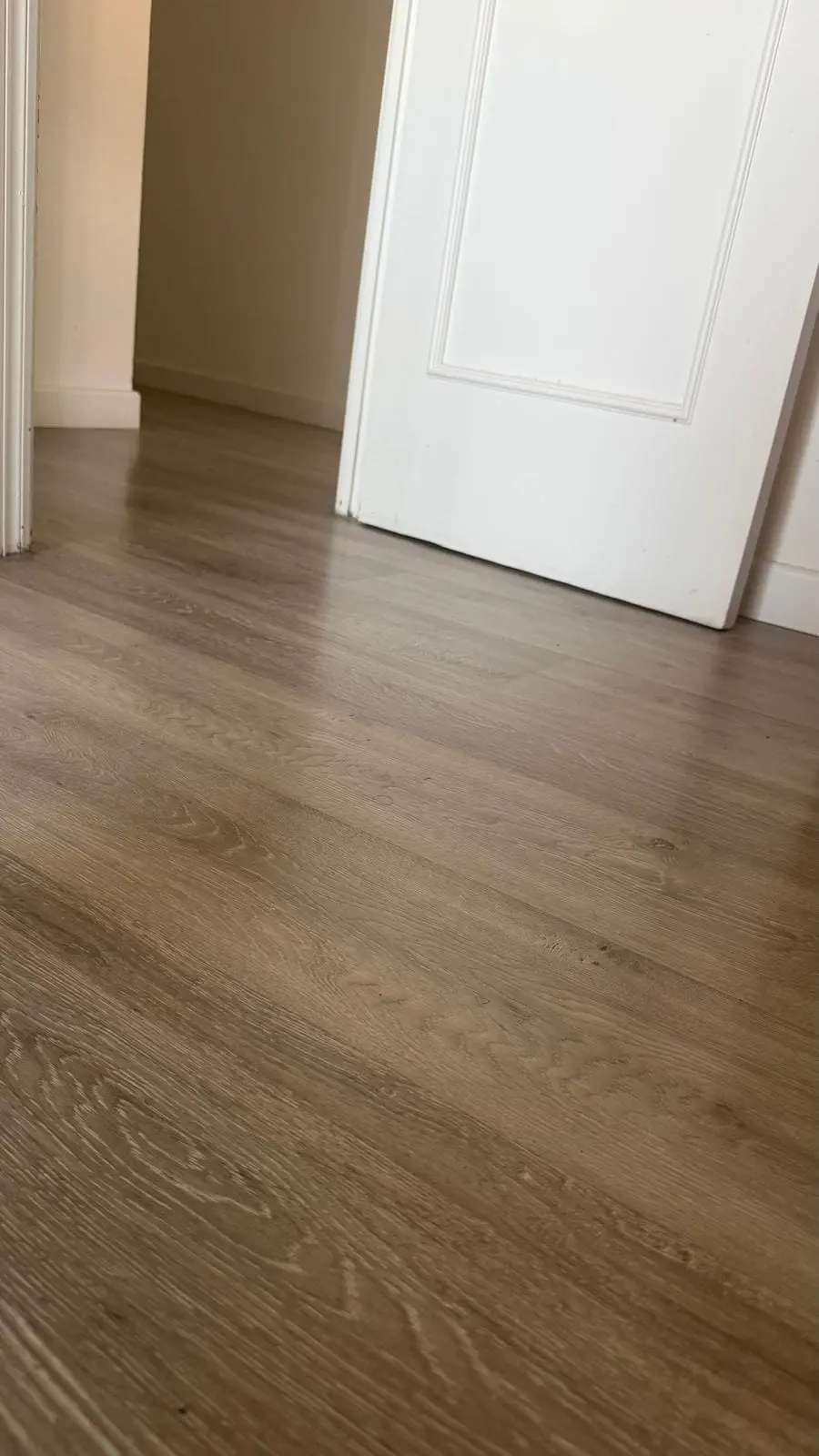
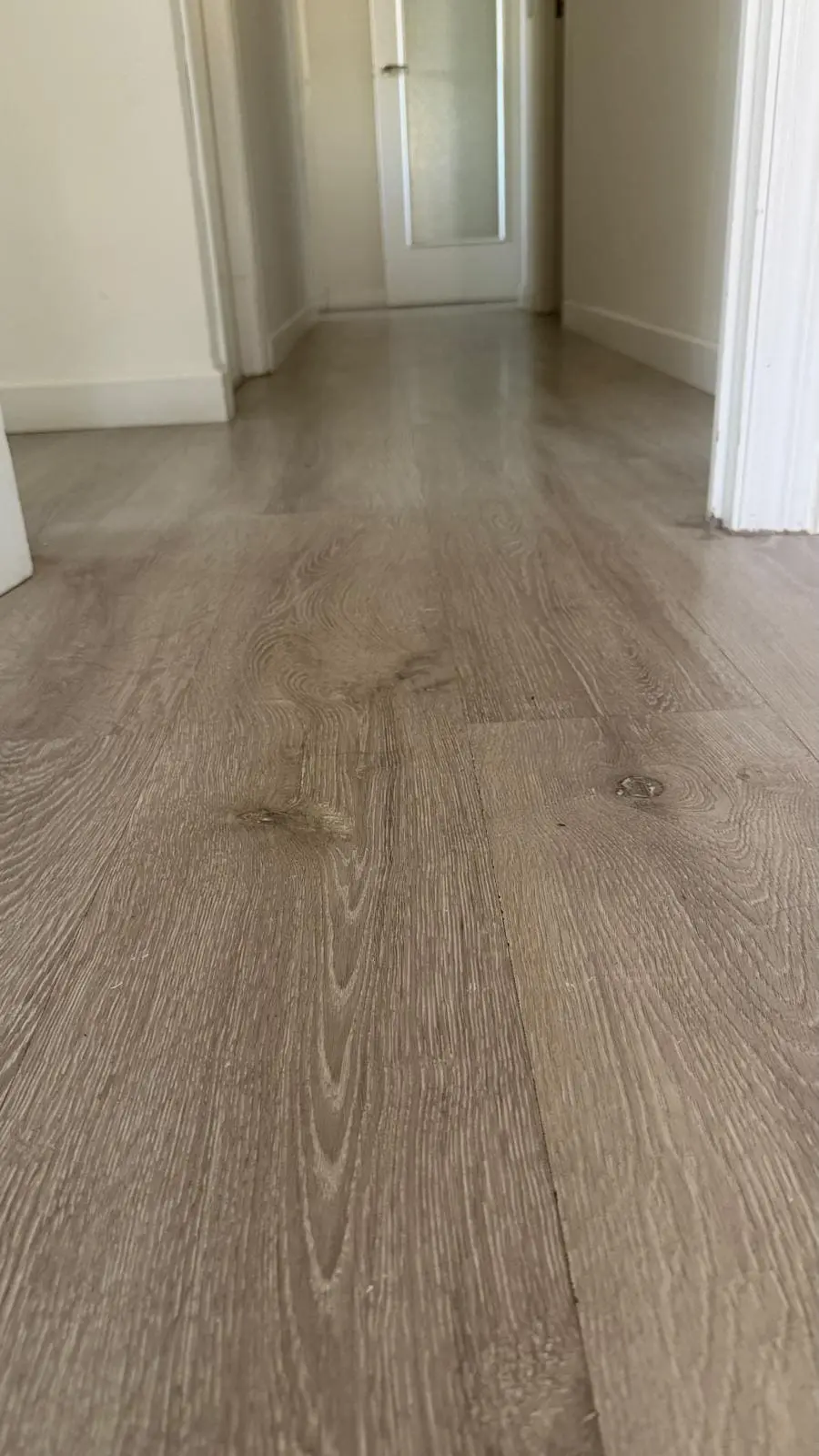
Floating floor installation in a flat in Gamonal

Installation of laminate floating flooring in a flat in a 1970s block in Gamonal, over a terrazzo floor with unevenness that had to be corrected before laying the first plank.

Context

Gamonal, the most populated neighbourhood in Burgos, with plenty of blocks built between the 1960s and 1980s that reach renovation after decades of use, usually with the original terrazzo still underneath any later flooring.

Common challenge

The terrazzo floor showed several millimetres of unevenness between rooms and a building expansion joint crossing the hallway, on top of the need to let the material acclimatise before installing because of the humidity and temperature swings typical of the Burgos climate.

What we usually do

  • Checking the floor planimetry with a laser level and locating the areas with the most unevenness in the living room and hallway.
  • Acclimatising the laminate flooring in the flat itself for 48 hours, with the packs opened and kept off the floor, before starting to lay it.
  • Applying self-levelling compound to the areas with the most unevenness and rolling out foam underlay as acoustic insulation and to absorb irregularities.
  • Laying AC4 laminate flooring Spanish-style with a click system, leaving an 8-10 mm perimeter expansion joint hidden under the skirting board.
  • Cutting an intermediate expansion joint in the hallway, matching the building’s structural joint, so the flooring does not work against a fixed point.
  • Fitting matching skirting boards and trims at the doorways between rooms.

Usual materials and systems

  • 8 mm AC4 laminate flooring with click system
  • Polyethylene foam underlay as acoustic base
  • Self-levelling compound to correct the original terrazzo unevenness
  • Lacquered skirting board and expansion joint profiles

Target result

The flat is left with a uniform floor with no noticeable unevenness underfoot, with the flooring already fitted with the expansion joints needed for normal use of the building, preventing the humidity swings between winter and summer in Burgos from causing creaking or lifting over time.
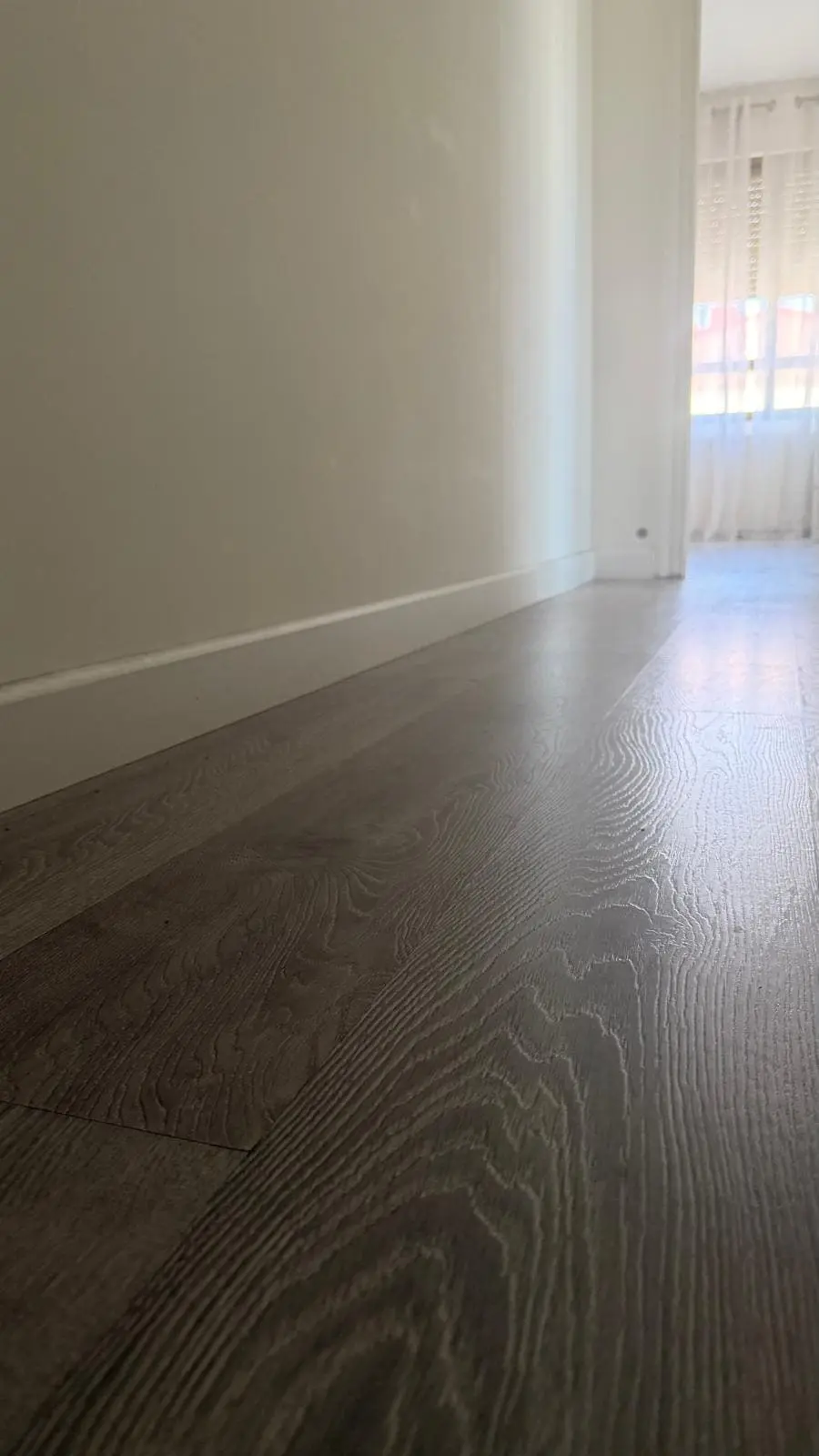
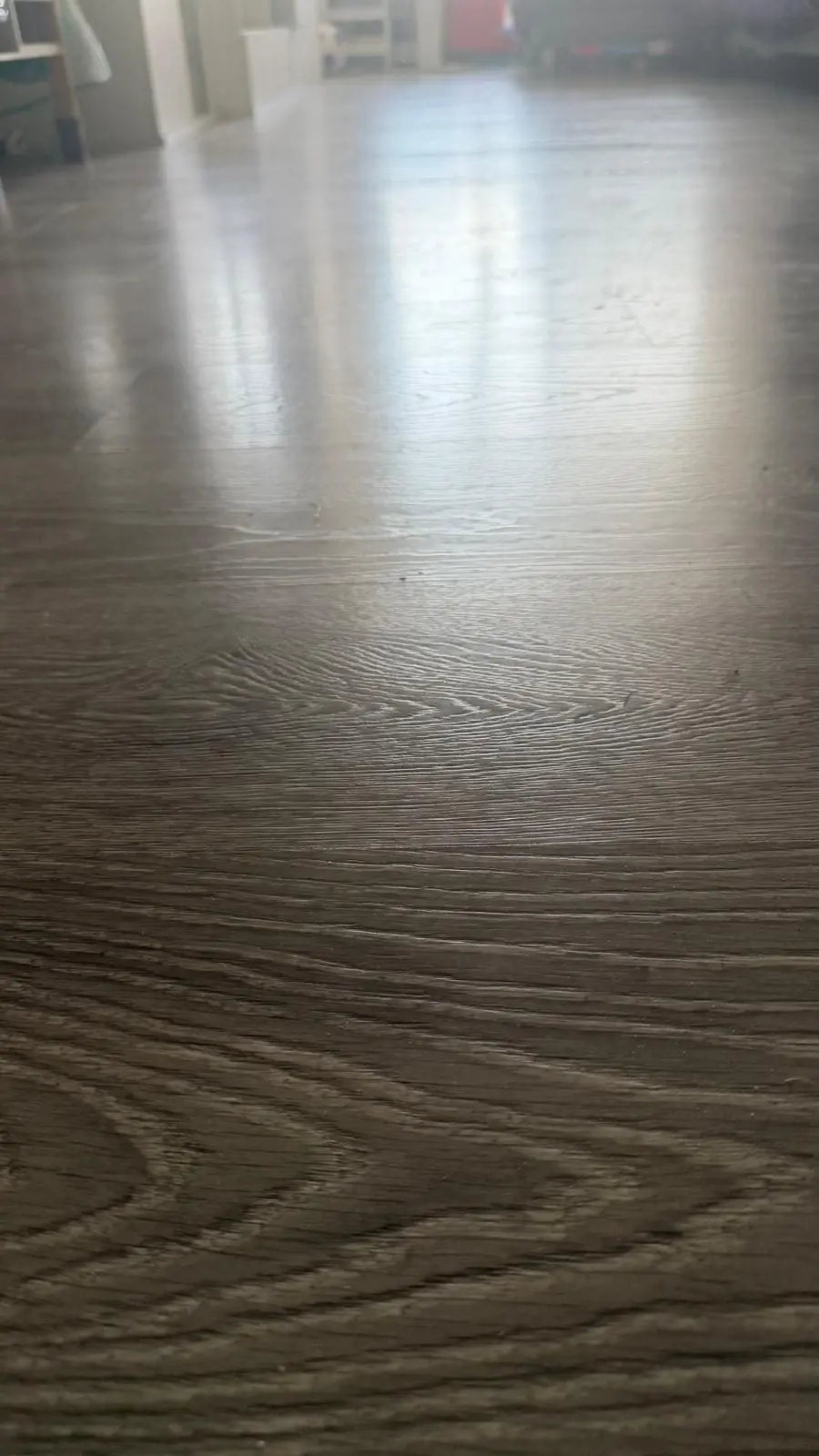
Floating floor installation in a flat in Gamonal: photo 1
Floating floor installation in a flat in Gamonal: photo 2
Floating floor installation in a flat in Gamonal: photo 3
Floating floor installation in a flat in Gamonal: photo 4

Practical site notes

  • In older blocks in Gamonal it is common to find several millimetres of unevenness in the original floor, so it is worth always budgeting for a planimetry check before giving a closed price.
  • Letting the material acclimatise in the home itself before installing greatly reduces the risk of the flooring moving in the first months, especially when installing in winter with the heating just switched on.
Case 2Flat in an old building in the historic centre

Sanding and varnishing of old oak parquet in the Historic Centre of Burgos

Restoration of an original herringbone oak parquet floor in a flat in the Historic Centre of Burgos, with decades of overlapping wax and varnish, sanding and varnishing it instead of replacing it.

Context

Centro (Historic Centre) of Burgos, with old buildings and original solid wood floors that are often worth restoring rather than removing, although the subfloor tends to be somewhat uneven after so many years.

Common challenge

The parquet had loose blocks in several areas, a thick layer of darkened wax and deep scratches from decades of use, plus the fact that the building’s floor was not perfectly flat and the original herringbone pattern had to be respected without throwing it out of true while sanding.

What we usually do

  • Block-by-block inspection to detect loose, lifted or damaged pieces requiring targeted replacement with wood of the same species and cut.
  • Re-gluing and fixing the loose blocks before starting to sand, so the machine would not lift them further.
  • Sanding in 3 passes with a belt sander and decreasing grit, followed by an edge sander pass around the perimeter and skirting board junctions.
  • Thorough vacuuming and dust removal from sanding throughout the room before applying the sealer.
  • Applying a pore-sealing primer and two coats of water-based varnish, with a light sanding between coats to remove the grain raised by the first layer.

Usual materials and systems

  • Replacement oak blocks of the same species and thickness
  • Parquet glue for re-gluing loose pieces
  • Pore-sealing primer for oak wood
  • Water-based varnish for medium-high traffic parquet

Target result

The original parquet regains its colour and natural shine without losing the building’s character, with a finish resistant to daily traffic and without the strong smell or long drying times of a traditional polyurethane varnish.

Sanding and varnishing of old oak parquet in the Historic Centre of Burgos: illustrative imageIllustrative image

Practical site notes

  • In old parquet floors in central Burgos, sanding and varnishing is almost always worth it instead of replacing: the original solid wood usually has enough thickness left for several more sandings over its lifetime.
  • Water-based varnish lets you walk on the room sooner than a solvent-based polyurethane, which matters when the flat is occupied and cannot be closed off for several days.
Case 3Commercial hospitality premises

SPC vinyl flooring in a hospitality premises in Burgos city centre

Installation of SPC vinyl flooring in the dining area of a bar in Burgos city centre that needed a floor resistant to water, chairs and continuous customer traffic without closing the business longer than strictly necessary.

Context

Burgos city centre, ground-floor premises with direct street access, concrete slab under an old tile floor that was left in place to avoid extending the works.

Common challenge

The premises needed to stay open most of the time, with a floor able to withstand water, chair and table scraping and intensive daily cleaning, without the new flooring noticeably raising the entrance step.

What we usually do

  • Checking the condition and planimetry of the existing tile to decide on installing directly over it without breaking up the floor.
  • Targeted levelling with low-thickness self-levelling compound in the areas where the tile had raised edges.
  • Laying rigid-core SPC vinyl flooring with a click system, with no need for gluing or adhesive drying times.
  • Silicone sealing around the perimeter next to the bar counter and at the entrance door junctions, the areas most exposed to water and mop cleaning.
  • Fitting transition profiles at the entrance to the kitchen and toilet to separate the different floor coverings.

Usual materials and systems

  • Rigid mineral-core SPC vinyl flooring
  • Low-thickness self-levelling compound for commercial premises
  • Aluminium transition profiles
  • Silicone sealant for water-exposed areas

Target result

The premises now has a waterproof floor that withstands the intensive traffic typical of hospitality and is easy to clean daily, installed in a short time and without needing to remove the old floor, which allowed the business to reopen normally.

SPC vinyl flooring in a hospitality premises in Burgos city centre: illustrative imageIllustrative image

Practical site notes

  • In hospitality premises, SPC vinyl flooring holds up far better to water, chairs and daily cleaning than any wood or laminate flooring, although it does not offer the same look or feel as natural wood.
  • Installing over an existing floor in good condition, without removing it, significantly reduces the days of work and the disruption for a business that needs to keep trading.
Case 4Home with laminate flooring

Repair of a floating floor sunk by a water leak

Repair of a swollen and sunken floating floor area in the kitchen of a home in Burgos, after a leak under the sink that had gone unnoticed for weeks.

Context

Home in Burgos city, with laminate flooring installed several years earlier, the affected area next to the kitchen unit, where water from a slow leak had seeped under the boards without being noticed until the floor started to give way underfoot.

Common challenge

Before repairing anything, the source of the moisture had to be located and fixed, the extent of the water spread under the flooring checked, and it had to be assessed whether the underlay and subfloor were also damaged, not just the visible boards.

What we usually do

  • Locating the source of the leak at the sink trap and repairing the plumbing before touching the floor.
  • Lifting the affected boards and an additional perimeter strip to check the real extent of the moisture under the flooring.
  • Removing and replacing the wet foam underlay, and checking the residual moisture of the subfloor before continuing.
  • Waiting for the necessary drying time of the base floor, checking the moisture level before reinstalling.
  • Replacing the damaged boards with new boards of the same reference and fitting the click system with the rest of the existing flooring.

Usual materials and systems

  • Equivalent-reference laminate flooring boards for targeted replacement
  • New polyethylene foam underlay
  • Moisture meter to check the subfloor before reinstalling
  • Sealant for the junction between the flooring and the kitchen unit

Target result

The affected area is repaired without needing to lift the whole home, with the source of the moisture resolved and the floor checked before closing the repair, preventing the problem from reappearing weeks later under a new board.

Repair of a floating floor sunk by a water leak: illustrative imageIllustrative image

Practical site notes

  • When a floating floor sinks underfoot or bulges in a specific area, there is almost always water underneath: repairing only the surface without finding the source is a temporary fix that fails again.
  • It is worth checking the subfloor moisture with a meter before reinstalling, even if the surface already feels dry to the touch, to avoid sealing residual moisture under the new flooring.
Case 5Detached chalet

Solid oak flooring in a chalet in Villímar

Installation of solid oak flooring on the main floor of a chalet in Villímar, in a recently built detached house where the owner wanted a natural wood floor instead of laminate.

Context

Villímar, an expanding area of Burgos with newer housing, in this case a chalet with no underfloor heating installed, with a concrete slab and good accessibility for working with long solid wood boards.

Common challenge

Solid wood flooring needs more acclimatisation time and more care with the ambient relative humidity than laminate flooring, and in Burgos the swings between the dry, cold winter and the hot summer require a more generous expansion margin than with other materials.

What we usually do

  • Checking the moisture of the slab and the ambient conditions of the home before bringing in the material.
  • Acclimatising the solid wood flooring in the home itself for several days, in the room where it was going to be installed, before starting to lay it.
  • Gluing the boards down onto the levelled slab, alternating the plank layout to distribute the grain naturally.
  • Leaving a somewhat larger than usual perimeter expansion joint, planned for the seasonal changes of the Burgos climate, hidden under the skirting board.
  • Fine sanding of the whole surface after installation and applying natural oil to bring out the wood grain.

Usual materials and systems

  • Large-format solid oak flooring boards
  • Specific adhesive for glued solid wood flooring
  • Natural finishing oil for solid wood
  • Matching solid wood skirting board

Target result

The chalet now has a natural solid wood floor with a warm, long-lasting finish, installed with the expansion margin needed for the material to move with the seasons without creaking or gaps opening up between boards.

Solid oak flooring in a chalet in Villímar: illustrative imageIllustrative image

Practical site notes

  • Solid wood flooring requires more acclimatisation time than laminate or multilayer flooring: in Burgos, with dry, cold winters and hot summers, that margin is not optional if you want to avoid the floor working excessively in its first year.
  • An oil finish, compared to varnish, allows targeted touch-ups in areas with more wear without having to sand the whole room again.
Case 6Detached house with underfloor heating

Underfloor-heating-compatible flooring in a home in Aranda de Duero

Installation of low thermal resistance multilayer flooring over underfloor heating in a detached house in Aranda de Duero, in the Ribera del Duero area, where the owner wanted to keep the heating performance without giving up the look of wood.

Context

Aranda de Duero, the second most populated city in the province of Burgos, with plenty of relatively recently built detached houses that already include underfloor heating as standard.

Common challenge

Not all wood flooring is suitable for underfloor heating: a product with a thermal resistance low enough not to block heat flow had to be chosen, and a gradual heating start-up had to be planned after installation to avoid subjecting the material to a sudden temperature change.

What we usually do

  • Checking the existing underfloor heating installation and the maximum surface temperature before choosing the product.
  • Selecting multilayer flooring certified as suitable for underfloor heating, with low thermal resistance and suitable dimensional stability.
  • Floating installation with a low thermal resistance underlay specific to underfloor heating, instead of standard foam.
  • Perimeter expansion joint adjusted to the manufacturer’s guidelines for floors with underfloor heating.
  • Gradual start-up of the heating after installation, raising the temperature step by step over several days before reaching the normal operating level.

Usual materials and systems

  • Multilayer flooring certified as suitable for underfloor heating
  • Low thermal resistance insulating underlay for underfloor heating
  • Specific expansion profiles for floors with integrated heating
  • Skirting board with ventilation gap at critical junctions

Target result

The home keeps the underfloor heating performance with barely any loss of efficiency, with a natural wood-look floor that heats up evenly and without the creaking or movement that appears when an unsuitable material is installed over underfloor heating.

Practical site notes

  • Not every laminate or multilayer flooring works with underfloor heating: the manufacturer’s certification and thermal resistance must be checked before buying the material, not after installing it.
  • Raising the heating temperature gradually after installation, instead of turning it up to maximum on the first day, greatly reduces the risk of the wood moving abruptly.

Want us to assess a similar case?

If your home, community or business premises looks similar to one of these examples, we can inspect the subfloor and explain the most suitable system before quoting.

We assess the subfloor, moisture, existing layers and preparation needs.
We explain what part is preparation and what part is the finished floor.
We adapt materials and expansion joints to the real condition of each surface.
The quote is based on the intervention required, not on a generic template.